Health and Safety Policy — Flat Clearance Greenwich
 This Health and Safety Policy sets out the commitment of Flat Clearance Greenwich and associated flat clearance, rubbish removal and apartment clearance services to protect the health, safety and welfare of staff, contractors, residents and visitors. It applies to all activities undertaken in connection with clearance, rubbish collection and waste removal operations carried out by the company. The policy emphasises proactive risk management, safe systems of work and continuous improvement to prevent accidents, injuries and occupational ill-health.
All personnel engaged in flat clearance, rubbish removal or house clearance duties must understand and follow the requirements set out here. Managers and supervisors will ensure that safe working practices are embedded through clear instruction, suitable supervision and adequate resourcing. The company will allocate sufficient time, equipment and training to enable teams to carry out clearances safely and efficiently.
 Risk assessment and planning are central to safe waste clearance operations. Before any flat junk removal or clearance job, a suitable and sufficient risk assessment must be completed to identify hazards such as manual handling risks, sharps, hazardous materials, structural hazards, pests and fire risks. Controls identified in assessments must be implemented and recorded. Where required, a permit-to-work or method statement will be prepared for complex or high-risk clearances.
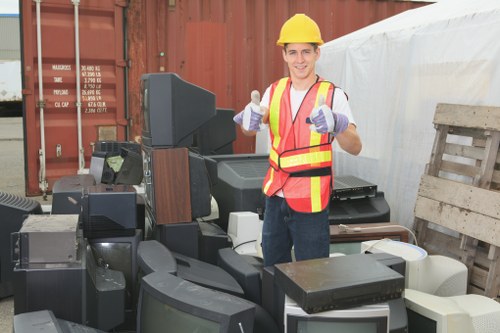
Personal protective equipment is provided where necessary and must be used correctly. This includes gloves, eye protection, steel-toe footwear, hi-vis clothing and respiratory protection where dust, mould or strong odours are present. Staff are trained in correct selection and use of PPE and in assessing when enhanced protection is required. Failure to wear required PPE is a breach of policy and may result in disciplinary action.
Responsibilities
Managers and supervisors carry responsibility for ensuring the safety of rubbish clearance operations. They must ensure that:- Risk assessments are carried out and controls implemented;
- Staff are trained and competent for tasks such as manual handling and hazardous materials handling;
- Equipment is maintained and inspected; and
- Incidents are reported and investigated.

Training and competence
Effective training underpins safe flat clearance and rubbish disposal work. Training covers manual handling techniques, site hazards awareness, safe loading and transport of waste, segregation and recycling procedures, use of tools and equipment, and emergency procedures. Refresher training will be provided regularly. Competence is assessed through supervised practice and observation.Manual handling is a key risk in clearance work. The company enforces safe lifting techniques, two-person lifts for bulky or heavy items, use of mechanical aids (trolleys, sack trucks, lifting straps) and pre-planned lifting routes. Where an item is assessed as unsafe to move, staff must stop work and seek manager guidance. The use of correct posture and incremental loads reduces musculoskeletal injuries.
 Hazardous materials such as asbestos-containing materials, batteries, solvents, chemical containers and sharps require special handling. Staff will not attempt to remove suspect asbestos or unknown hazardous waste; these items will be isolated and escalated to suitably qualified specialists. Contaminated materials are segregated, labelled and stored securely before transfer to authorised disposal facilities according to waste segregation rules and environmental protection best practice.
 Emergency procedures include fire safety measures, first aid provision and incident reporting processes. All operatives must know the location of first aid kits and fire extinguishers, and understand evacuation procedures for the properties where they work. All incidents, near misses and injuries must be reported promptly so that corrective actions can be taken and lessons shared across the team.
Vehicle safety and site access are important aspects of clearance operations. Drivers and loaders must ensure that vehicles are loaded to safe and legal limits, loads are secured to prevent shifting, and that vehicle checks are completed before departure. When working on or near public highways, appropriate signage, cones and safe systems must be used to protect operatives and the public.
Monitoring, audit and review: The company will monitor performance through periodic site inspections, audits and review of incident data. Findings will be used to update procedures, training and equipment. This policy will be reviewed annually or when significant changes occur in operations, legislation, or industry standards to ensure ongoing suitability and effectiveness.
Commitment: The leadership team endorses this policy and expects everyone involved in flat clearance, rubbish clearance and waste removal services to prioritise safety. By working together, following procedures and maintaining vigilance, we reduce risks, protect people and deliver reliable, responsible clearance services.